
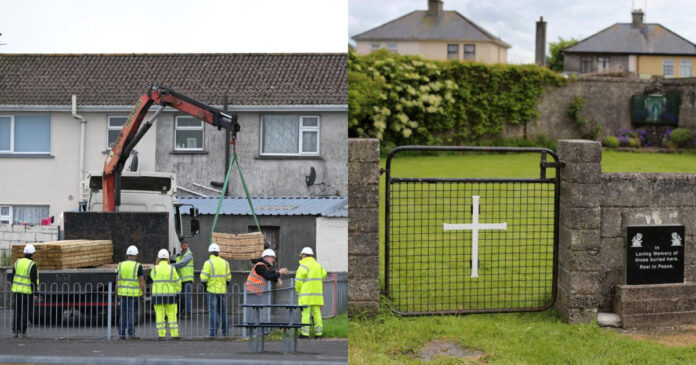

Excavation of mass grave tied to decades of abuse, secrecy, and a scandal that rocked the Catholic Church.
Only a crumbling wall remains of the old Bon Secours Mother and Baby Home in Tuam, Ireland, but the ground beneath it may hold the darkest secrets of a nation’s past.
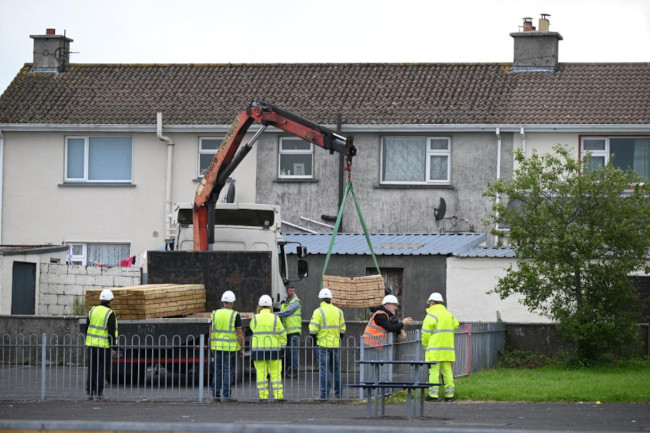
Officials began exhuming a suspected mass grave that could hold nearly 800 infants and young children, some of them in a defunct septic tank. Local historian Catherine Corless later revealed that 796 infants from the home were never accounted for. The site, described as a “chamber of horrors” by former Prime Minister Enda Kenny, is now the focus of one of Ireland’s most painful reckonings.
A Legacy of Shame and Secrecy
Run by the Bon Secours Sisters from 1925 to 1961, the Tuam home was part of a system that institutionalized unmarried mothers, separating them from their babies and often subjecting both to abuse, neglect, and death.
The chilling truth about Tuam only came to light in 2014, thanks to the tireless research of local historian Catherine Corless, who discovered that hundreds of children were never accounted for and that many may have been discarded into a sewage pit.
Test excavations later confirmed an untold number of tiny skeletons in the sewage pit.
Pope Francis issued an apology for the Church’s role, and the nuns expressed regret for having failed to live up to Christian values.
Stories That Still Haunt
For survivors and their families, the excavation is reopening old wounds.
Annette McKay recounted her mother’s traumatic experience — raped as a teenager by a caretaker, sent to the home, and later told by a nun that “the child of your sin is dead.” Decades later, McKay discovered her sister’s name in a newspaper report about the site. Her mother died in 2016, never reunited with her child.
Another survivor, Barbara Buckley, was adopted after spending her infancy at Tuam. When she finally met her birth mother as an adult, she was told it would be their only meeting. “I don’t want anyone finding out about this,” her mother said.
For Pete Cochran, who was adopted into an American family, visiting Tuam before the dig brought bittersweet relief. “I hope they don’t find 796 bodies,” he said. “That all these children were adopted and had a good life like I did.”
Digging for the Truth
The excavation is not just about remains, it’s about identity, accountability, and dignity.
For families like the McKays, the hope is simple: to recover even the smallest trace of their lost children and give them a proper burial, beside the mothers who never stopped grieving.
As Ireland continues to confront the legacy of its mother and baby homes, Tuam stands as a painful reminder, and a solemn promise, that the forgotten will no longer remain hidden.